Sunday, May 11, 2025

Why Glacier National Park Should Be Your Next Adventure [2025 Guide]

Discover Glacier National Park in Montana – a breathtaking destination with rugged mountains, scenic trails, pristine lakes, and abundant wildlife. Plan your trip today!

Hero Image for Why Glacier National Park Should Be Your Next Adventure [2025 Guide] 

 Glacier National Park captivates visitors with its iconic Going-to-the-Sun Road, which typically remains buried under snow until mid to late June. Crews are currently working to dig out this spectacular alpine thoroughfare, with sections expected to open to Avalanche Campground on the west side and Rising Sun on the east side by this weekend. During our many visits, we've learned that timing is everything when planning a Glacier adventure. The Apgar Visitor Center will also open daily starting this weekend, ensuring easier access to information about trails and conditions. Additionally, visitors can hike and bike beyond gate closures on weekends, though certain sections will have bicycle restrictions during specific hours from June 13 through September 28. If you're considering when to explore this magnificent landscape, understanding these seasonal patterns is essential for an unforgettable experience.

What Makes Glacier National Park a Must-Visit in 2025

Image

Image Source: Etsy

Nicknamed the "Crown of the Continent," Glacier National Park stands as one of North America's most captivating wilderness areas. Established on May 11, 1910, this majestic landscape spans 1,583 square miles of pristine mountains, lakes, and forests that form an ecosystem unlike any other in the lower 48 states.

What truly sets Glacier apart is its remarkable biodiversity. The park shelters 71 species of mammals, from tiny pygmy shrews to powerful grizzly bears, alongside 276 documented bird species. Furthermore, botanists have identified 1,132 vascular and 858 non-vascular plant species throughout its varied terrain. This extraordinary collection of life exists in a remarkably intact ecosystem, protected for over a century.

The park's geological story is equally impressive. The towering mountains and valleys were sculpted by massive ice flows over two million years. Today, 26 named glaciers remain, all gradually shrinking – down dramatically from approximately 80 counted in the 1850s. In fact, the largest, Harrison Glacier, measures 1,661,456.75 square meters. Consequently, visiting soon means witnessing these ancient ice formations before they potentially disappear.

Photographers find paradise in Glacier's diverse landscapes:

  • Lake McDonald: Stunning sunrise reflections and colorful pebble shorelines
  • Logan Pass: Alpine meadows bursting with summer wildflowers
  • Many Glacier: Often called "Switzerland of North America" for its striking peaks
  • Two Medicine: Dramatic mountain views with vibrant lake waters

The park gained international recognition as a Biosphere Reserve in 1974, and in 1995, the Waterton-Glacier International Peace Park became a World Heritage Site. This designation acknowledges the area's exceptional natural beauty and biodiversity.

Visitation has grown steadily, from 2,200,048 visitors in 2010 to over 3 million in recent years. Nevertheless, Glacier's vast wilderness still offers solitude for those willing to explore its 762 lakes and 734 miles of hiking trails. For stargazers, the park's designation as a Dark Sky Park means unparalleled views of the Milky Way and occasionally even the Northern Lights.

Top Things to Do in Glacier National Park

Discovering Glacier National Park begins with immersing yourself in its diverse activities. Whether you're seeking adventure or relaxation, the park offers unforgettable experiences for visitors of all ages.

Exploring the iconic Going-to-the-Sun Road ranks as a must-do activity. This 50-mile scenic drive takes approximately 2 hours without stopping and crosses the Continental Divide at Logan Pass (6,646 feet). For 2025, note that personal vehicle access into Many Glacier will be restricted from July 1-September 21 due to construction, with a temporary shuttle service provided for hikers.

Boating enthusiasts can enjoy scenic tours on the park's pristine lakes. Glacier Park Boat Company offers guided experiences at Lake McDonald, St. Mary Lake, Two Medicine Lake, and Many Glacier. Tours cost between USD 25.00 to USD 40.00 for adults and USD 13.00 to USD 20.00 for children. Many tours include informative commentary about history, geology, and wildlife.

Hikers will find trails for every skill level throughout the park. Family-friendly options under 5 miles include:

  • Avalanche Lake: A 4.5-mile roundtrip through cedar and hemlock forest with views of waterfalls
  • Hidden Lake Overlook: A 2.7-mile roundtrip from Logan Pass featuring alpine meadows and wildlife viewing
  • Trail of the Cedars: A wheelchair-accessible 0.9-mile loop through old-growth forest

For wildlife enthusiasts, Logan Pass consistently offers sightings of mountain goats and bighorn sheep, while the east side near Two Dog Flats is known for grizzly bear sightings.

Ranger-led activities provide educational experiences throughout summer. These include guided hikes, evening programs at campgrounds, and Native America Speaks presentations featuring Blackfeet, Salish, Kootenai, and Pend d'Oreille tribal members sharing their knowledge and culture.

For families, the Junior Ranger program offers engaging activities for children to learn about nature and history while earning their Junior Ranger badge. Simply pick up a Junior Ranger Activity Booklet at any visitor center and complete the required activities during your stay.

Planning Your Trip: What You Need to Know

Preparing for a Glacier National Park adventure requires careful planning given the park's remote location and seasonal nature. To make the most of your 2025 visit, consider these essential details.

Glacier's weather varies dramatically across the park because it straddles the Continental Divide. Western valleys receive more rainfall but can reach above 90°F in summer, whereas the east side experiences stronger winds and cooler temperatures. Pack layers regardless of season, as overnight temperatures can drop to freezing even in summer.

Timing your visit is crucial. For optimal access to park features, plan between late June and mid-September. However, for fewer crowds, consider mid-June or September when many facilities remain open. Remember that Going-to-the-Sun Road typically doesn't fully open until late June and closes by mid-October.

For lodging, reservations open 13 months in advance and fill quickly. Options include historic lodges like Lake McDonald Lodge and Many Glacier Hotel, along with motels and cabins. Alternatively, choose from 13 campgrounds with approximately 1,009 sites throughout the park. Seven campgrounds require reservations, while others are first-come, first-served.

Important for 2025: Vehicle reservations will be required for the west side of Going-to-the-Sun Road and North Fork area from June 13 through September 28 between 7 a.m. and 3 p.m. Reservations become available February 12, 2025. Additionally, Many Glacier will have limited access July 1-September 21 due to construction.

To reach the park, fly into Glacier Park International Airport (30 miles from West Entrance) or take Amtrak's Empire Builder train line which stops at West Glacier year-round. Within the park, a free shuttle service operates during summer, but check the schedule as it changes yearly.

For those staying outside park boundaries, the towns of West Glacier, Columbia Falls, and Whitefish on the west side or St. Mary and East Glacier Park on the east side offer excellent bases.

Conclusion

Glacier National Park undoubtedly stands as one of America's most awe-inspiring natural treasures. Throughout this guide, we've explored what makes this magnificent landscape truly special - from its rich biodiversity housing 71 mammal species to the ancient glaciers that shaped its dramatic terrain. Most importantly, timing your 2025 adventure strategically will significantly enhance your experience, especially considering the seasonal road openings and upcoming construction projects.

Whether you choose to marvel at mountain reflections on Lake McDonald, hike to Hidden Lake's spectacular overlook, or observe wildlife at Logan Pass, Glacier offers countless unforgettable moments. Additionally, the park's designation as both a Biosphere Reserve and World Heritage Site speaks to its global significance and exceptional natural beauty.

Planning ahead remains essential for a successful visit. Therefore, mark your calendar for February 12, 2025, when vehicle reservations become available. Likewise, lodging reservations should be secured 13 months in advance due to high demand. Though visitor numbers have grown to over 3 million annually, Glacier's vast wilderness still provides peaceful solitude for those willing to venture beyond popular areas.

Above all, Glacier National Park represents nature at its most spectacular - a place where pristine ecosystems thrive against a backdrop of towering peaks and crystal-clear lakes. As the glaciers continue their retreat, visiting soon offers a chance to witness these ancient ice formations before they potentially disappear completely. The park's magic awaits your discovery in 2025.

FAQs

Q1. What is the best time to visit Glacier National Park in 2025? The optimal time to visit is between late June and mid-September when most facilities are open and accessible. For fewer crowds, consider mid-June or September. Keep in mind that the iconic Going-to-the-Sun Road typically doesn't fully open until late June.

Q2. Do I need a reservation to visit Glacier National Park in 2025? Yes, vehicle reservations will be required for the west side of Going-to-the-Sun Road and North Fork area from June 13 through September 28, 2025, between 7 a.m. and 3 p.m. Reservations become available on February 12, 2025.

Q3. What are some must-do activities in Glacier National Park? Top activities include driving the Going-to-the-Sun Road, hiking popular trails like Avalanche Lake or Hidden Lake Overlook, taking a boat tour on one of the park's pristine lakes, and participating in ranger-led programs to learn about the park's history and wildlife.

Q4. Is Glacier National Park safe for solo female travelers? Glacier National Park is generally safe for solo travelers, including women. Popular trails are often crowded, reducing isolation. However, it's always wise to carry bear spray, know how to use it, and consider joining ranger-led hikes for added security and information.

Q5. Where should I stay when visiting Glacier National Park? Accommodation options include historic lodges within the park, such as Lake McDonald Lodge and Many Glacier Hotel, as well as campgrounds. For those staying outside the park, nearby towns like West Glacier, Columbia Falls, and Whitefish on the west side, or St. Mary and East Glacier Park on the east side, offer excellent bases for exploration.

Labels: , , , , ,

Tuesday, May 6, 2025

The Ultimate Glacier National Park Travel Guide: Your Gateway to Montana’s Crown Jewel


Glacier National Park, nestled in Montana's Rocky Mountains, is a pristine wilderness of alpine meadows, rugged peaks, and over 700 miles of hiking trails. Recognized as the #1 Best Place to Visit in the USA by U.S. News Travel, this million-acre expanse offers unparalleled opportunities for adventure and solitude.(U.S. News Travel)


🌄 Why Visit Glacier National Park?

Established in 1910, Glacier National Park is part of the Waterton-Glacier International Peace Park, the world’s first transboundary park shared with Canada. Its diverse ecosystems are home to over 70 species of mammals, including grizzly bears, moose, and the elusive Canada lynx. The park's dramatic landscapes, carved by ancient glaciers, feature more than 700 lakes, 175 mountains, and 26 glaciers, offering breathtaking vistas at every turn. (Earth Trekkers, Map Getaways, The Points Guy)


🚗 Getting There & Navigating the Park

✈️ Nearest Airport

Glacier Park International Airport (FCA) in Kalispell is the closest major airport, approximately 30 miles from the park's west entrance. (U.S. Park Pass)

🚘 Park Entrances

  • West Glacier Entrance: Most popular and accessible, leading to Lake McDonald and the Going-to-the-Sun Road.
  • St. Mary Entrance: Eastern gateway, providing access to Logan Pass and Many Glacier.
  • Two Medicine and Polebridge Entrances: Less crowded, offering serene landscapes and unique experiences.(Travel + Leisure, Kiplinger)

🚌 Transportation Tips

During peak season (July–August), parking can be challenging. Utilize the park's shuttle system along the Going-to-the-Sun Road to access popular trailheads without the hassle of parking. (Travel + Leisure)


🏞️ Top Attractions & Activities

1. Going-to-the-Sun Road

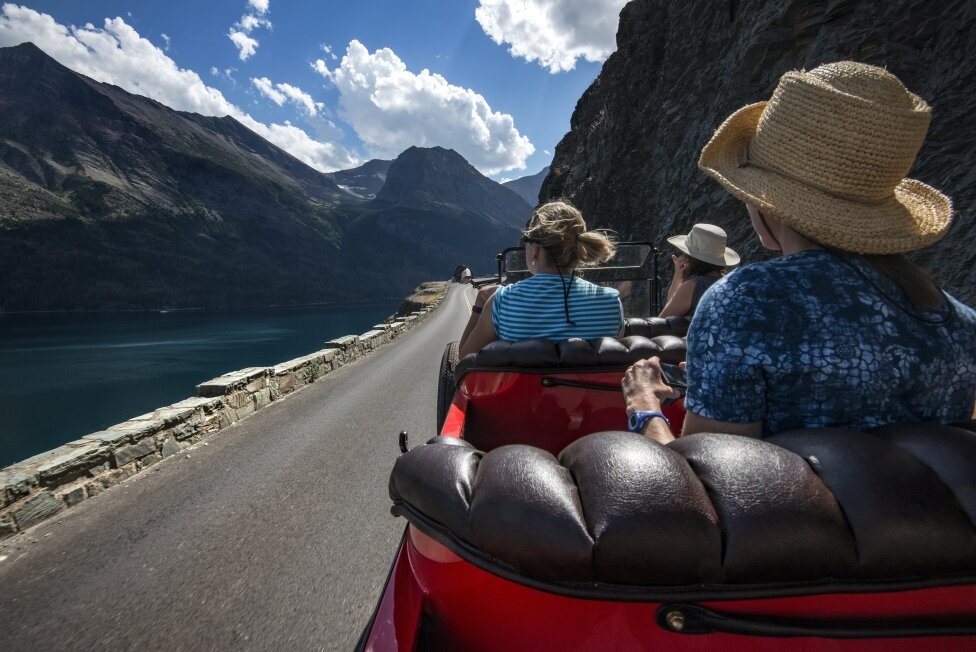
This 50-mile scenic drive traverses the park, offering panoramic views of mountains, valleys, and waterfalls. Highlights include Logan Pass, the highest point on the road, and the Weeping Wall, a natural waterfall cascading onto the roadway. (People.com)

2. Hiking Trails

  • Highline Trail: A 7.6-mile hike offering stunning vistas and opportunities to spot wildlife.
  • Grinnell Glacier Trail: A challenging 10.6-mile round trip leading to one of the park's remaining glaciers.
  • Avalanche Lake Trail: A moderate 4.5-mile hike through cedar forests to a picturesque alpine lake.

3. Wildlife Viewing

Early mornings and evenings are prime times to observe wildlife. Head to Many Glacier or Two Medicine areas for chances to see bears, moose, and mountain goats.

4. Red Bus Tours

Experience the park's beauty from vintage 1930s buses with knowledgeable guides narrating the journey. These tours offer a relaxed way to explore the park's highlights. (Glacier National Park)


🏨 Where to Stay

🏕️ In-Park Lodging

  • Lake McDonald Lodge: Historic lodge offering rustic charm and lakefront views.
  • Many Glacier Hotel: Swiss-style architecture with panoramic views of Swiftcurrent Lake.

🏘️ Nearby Accommodations

  • Whitefish: A vibrant town with a variety of lodging options, dining, and shopping.
  • Kalispell: Offers a range of accommodations and serves as a convenient base for park exploration.


📅 Best Time to Visit

The optimal time to visit is from mid-July to early September when all park facilities and roads are fully operational. Daytime temperatures average in the low 80s°F (27°C), while nights can be cool, dipping into the 40s°F (4°C). Be prepared for variable weather, especially in higher elevations where snow can linger into July. (U.S. News Travel)


🎒 Essential Tips for Your Visit

  • Reservations: During peak season, vehicle reservations are required for certain areas like the Going-to-the-Sun Road. (Travel + Leisure)
  • Wildlife Safety: Carry bear spray and know how to use it. Maintain a safe distance from all wildlife.
  • Leave No Trace: Practice responsible tourism by staying on designated trails and packing out all trash.
  • Stay Informed: Check the National Park Service website for current conditions, trail closures, and safety alerts.

    📚 Recommended Resources


    🏕️ Top Picks Summary

    • Glacier National Park Travel Guide 2024 Edition: A comprehensive guide covering trails, accommodations, and insider tips for the 2024 season.
    • Glacier National Park Travel Guide 2024/2025: Offers detailed insights into scenic trails and wildlife viewing opportunities.
    • Montana: Including Glacier National Park [Book]: Provides broader context on Montana's attractions, including Glacier National Park.
    • Montana Travel Guide [Book]: A thorough resource for exploring Montana's diverse landscapes and attractions.
    • Rumpl - Original Puffy Blanket - 1 Person Glacier National Park: A lightweight, packable blanket ideal for camping and picnics in the park.
    • Naturehike Large Inflatable Camping Tent With Pump: An easy-to-set-up tent suitable for families or groups seeking comfort in the wilderness.


    Embarking on a journey to Glacier National Park promises unforgettable adventures amidst some of America's most stunning natural beauty. With proper planning and the right resources, your trip will be both enjoyable and memorable.


Labels: ,